
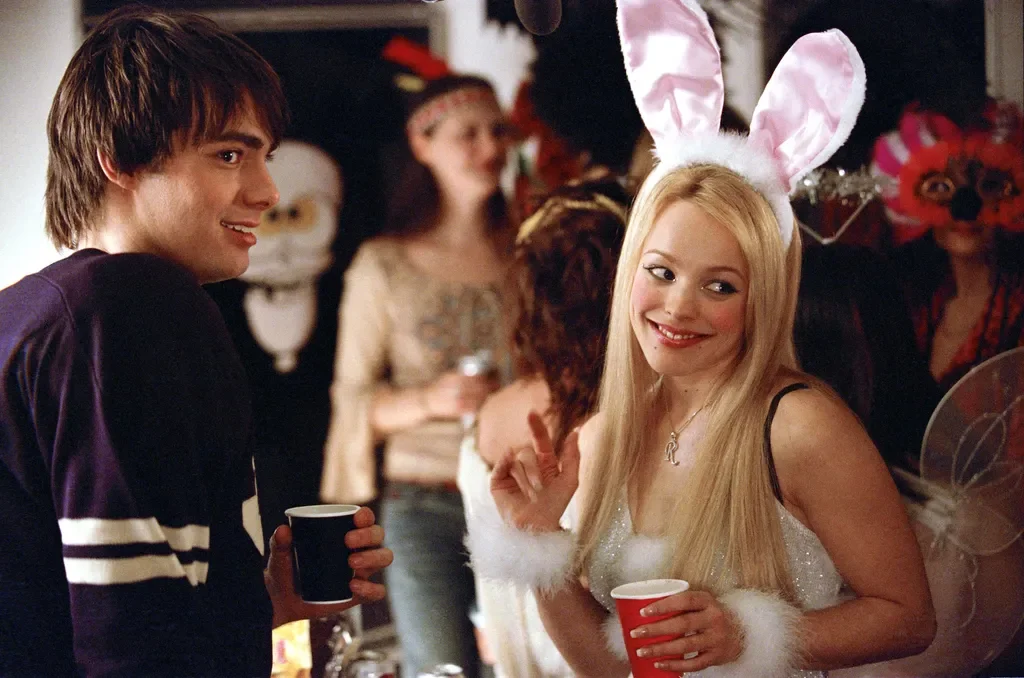
Halloween weekend just wrapped up in Gainesville, and with it came the same tired myth we hear every year: that what someone wears says something about what they want. Bunny ears, a short skirt, a crop top — none of it is an invitation. A costume is a costume. Consent is something else entirely, and it can only ever be given, never assumed from an outfit.
The costume aisle has a double standard
Walk into any costume store and the split is obvious. Men's costumes go for funny, scary or powerful: a plague doctor, a zombie, a full-body superhero suit. Women's versions of the same ideas, like police officers, nurses and superheroes, tend to come shorter, tighter and more revealing.
Research backs this up. West Chester University psychology professor Lauri Hyers and her colleagues have spent about a decade studying Halloween costumes, analyzing more than 1,600 of them. Their 2017 study found women's costumes were the most likely to be sexualized, while men's costumes leaned toward full coverage, disguise and power. Coverage of her work reports that roughly 90% of women's costumes were sexualized, compared with about 11% of men's.
That gap isn't about individual choices. It's about what the market puts on the shelf, and what it teaches us to expect from women's bodies.
When "sexy" borrows from childhood
Some costumes go a step further. Hyers' research also found that many women's costumes are infantilized, mixing childlike details like pigtails, bows, and polka dots into adult, sexualized looks. The "sexy schoolgirl" is the clearest example. It takes the uniform of an actual child and turns it into a sexual image.
This matters beyond Halloween. When girlhood is packaged as something to look at, it blurs a line that should never be blurred, and it makes real students, kids in real uniforms, targets of comments they never asked for.
You cannot wear consent
Here's the bottom line: no outfit is a yes. Not a bunny costume, not a crop top, not anything. Wearing a costume never means someone is asking for attention, touching or sex.
Consent is a clear, freely given, enthusiastic yes. It can't be implied by clothing, it can't be given by someone who is too drunk to decide, and it can be taken back at any time. If you're not sure, ask. If the answer isn't a clear yes, it's a no.
No one deserves catcalling, harassment or assault because of what they wear. Everyone should get to dress however they want, sexy, scary, silly or covered head to toe, and still be safe.
What we can do
Call it out. If a friend jokes that someone was "asking for it" because of their costume, say something.
Step in safely. If you see someone being harassed at a party, check on them, create a distraction or get help.
Shift the blame. The responsibility always sits with the person who chose to harass or assault, never with the person who chose an outfit.
Halloween should be fun, spooky and a little scary — not actually unsafe. Wear what you want, and respect what everyone else wears.
If you or someone you know has experienced sexual violence, you're not alone. You can reach the RAINN National Sexual Assault Hotline 24/7 at 800-656-4673.
Sources
Sullivan, Hipple & Hyers, "Female Disempowerment Disguised as a Halloween Costume", The Open Family Studies Journal, 2017
The Philadelphia Inquirer, "Is Halloween sexist? Researchers say yes," 2019
USA Today, "Have sexy Halloween costumes gone too far?" 2021
Inspired by @everyonesinvited' Halloween post
